If you live in humid climates like Georgia, you’ve probably seen it happen: green streaks on siding, black patches on shaded walls, slippery mildew on driveways, and dark spotting on fences or patios. It starts small—but it doesn’t stay that way.
So the real question homeowners ask is: can pressure washing actually get rid of mold and mildew around your home, or is it just a temporary fix?
Let’s break it down in a clear, practical way so you know what works, what doesn’t, and when to call a professional like Clearview.
The Problem: Mold and Mildew Don’t Just Look Bad
Mold and mildew are more than cosmetic issues. In Georgia’s warm, moist climate, spores thrive on exterior surfaces like:
- Vinyl and wood siding
- Roof shingles
- Concrete driveways and sidewalks
- Decks and fences
- Brick and stucco
Mildew typically appears as a gray or white surface growth, while mold is often darker, green or black, and more deeply rooted.
Here’s the real issue: they feed on organic material and moisture, meaning your home’s exterior becomes the perfect long-term environment when humidity stays high.
Left untreated, these growths can:
- Break down paint and finishes
- Stain siding permanently
- Make surfaces slippery and unsafe
- Spread to larger exterior areas over time
So while it starts as an appearance problem, it can turn into a maintenance and safety issue quickly.
The Guide: What Pressure Washing Actually Does
Homeowners often assume pressure washing “kills” mold. The truth is a little more nuanced.
Pressure washing removes:
- Surface mold and mildew
- Dirt and organic buildup
- Algae on siding and concrete
- Stains caused by environmental exposure
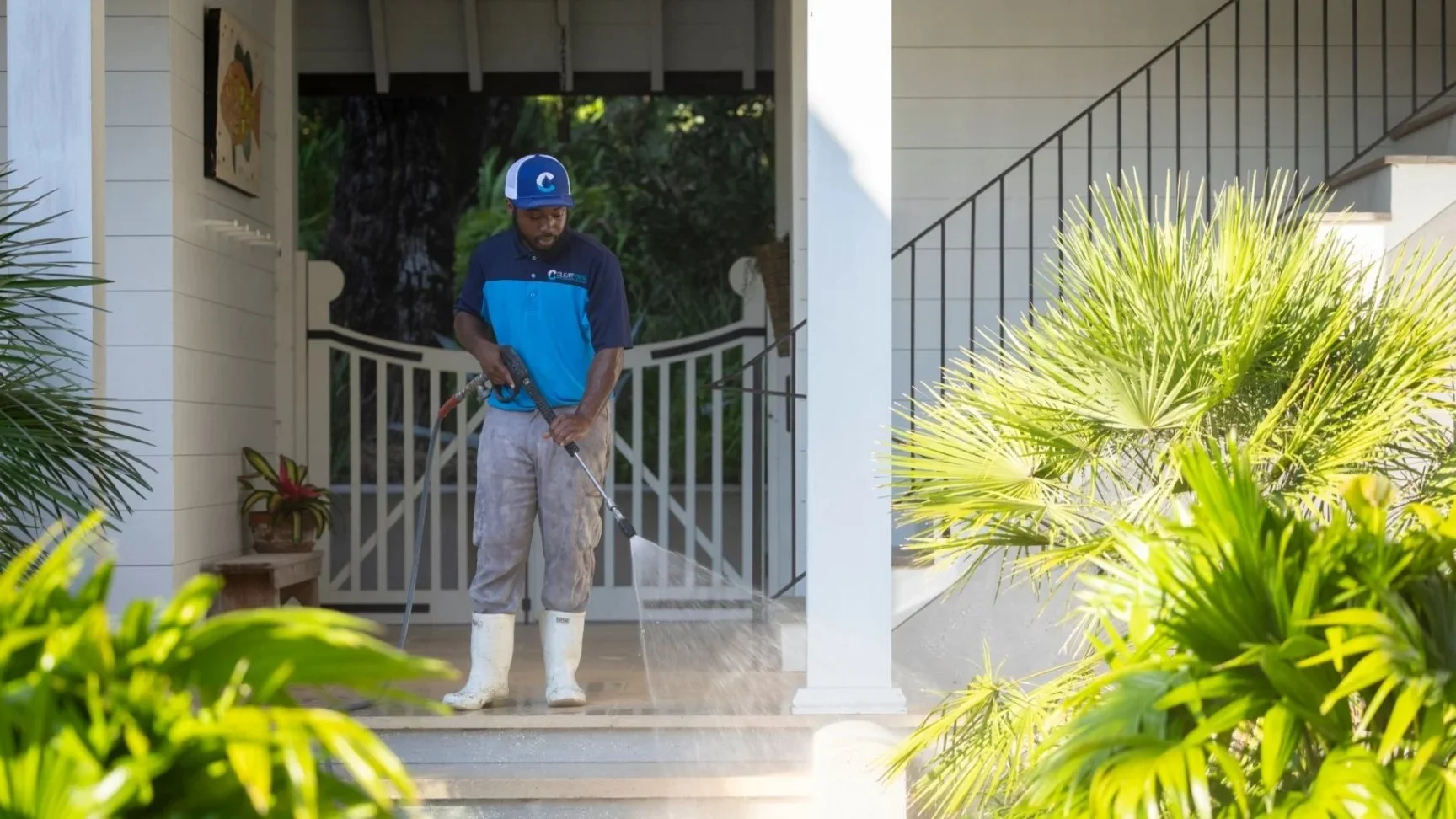
High-pressure water physically blasts away growth from exterior surfaces. That makes your home look clean immediately, and in many cases, it is effective at removing visible buildup.
But here’s what it doesn’t always do:
- It doesn’t always kill mold spores deep in porous materials
- It may not prevent regrowth if moisture problems remain
- It can sometimes spread spores if done incorrectly
That’s why professional cleaning often combines low-pressure washing (soft washing) + cleaning solutions designed to kill mold at the root instead of just rinsing the surface.
The Better Approach: Soft Washing vs. High Pressure
A key mistake homeowners make is assuming “more pressure = better cleaning.” In reality, that can damage your home.
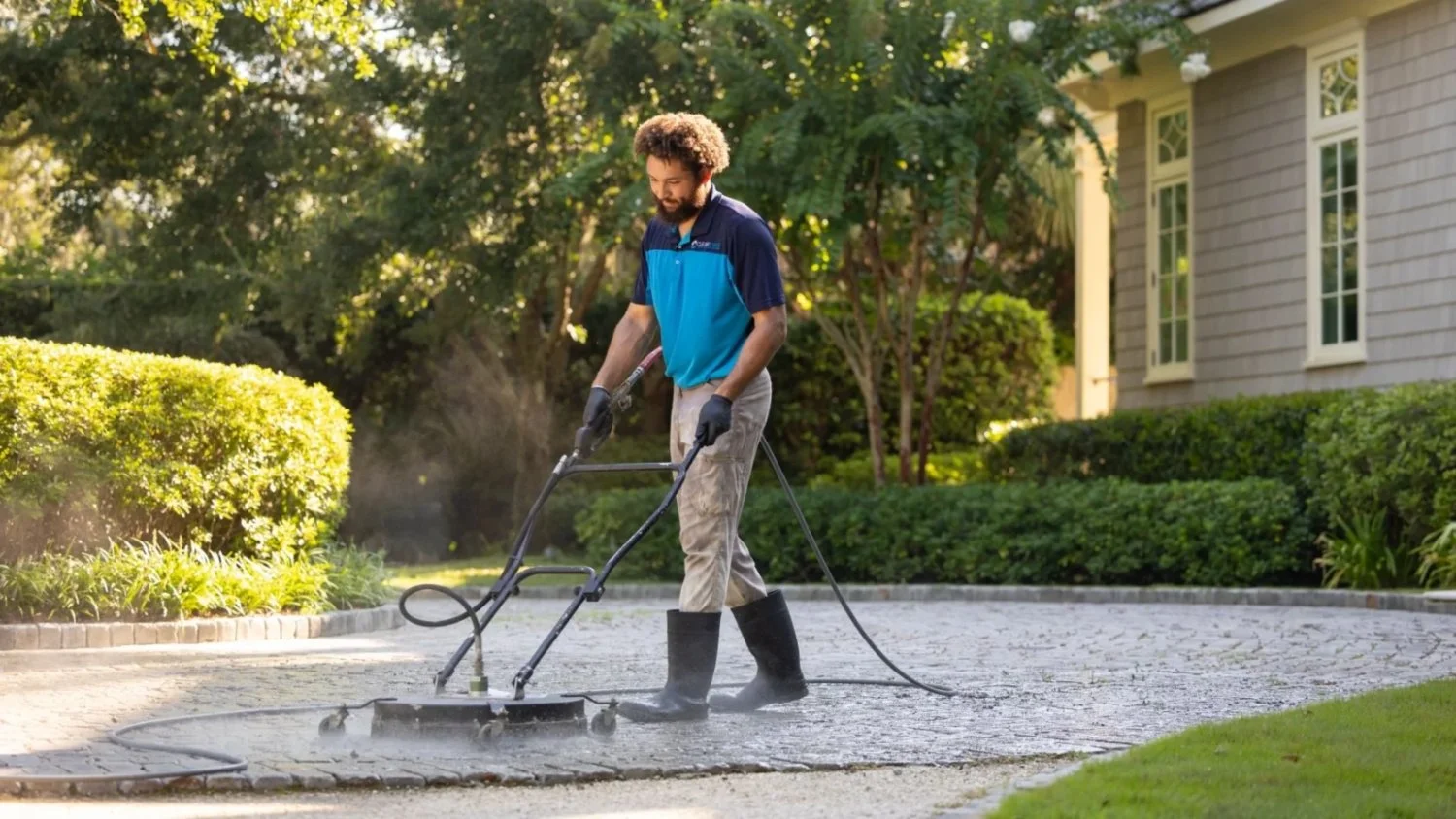
High-pressure washing works best for:
- Concrete driveways
- Stone walkways
- Brick surfaces
Soft washing is better for:
- Roofs
- Siding (vinyl, wood, fiber cement)
- Painted surfaces
- Delicate exterior materials
Soft washing uses low pressure and specialized cleaning agents that:
- Kill mold and mildew at the source
- Break down organic growth safely
- Prevent immediate regrowth better than water alone
In humid states like Georgia, this approach is often the difference between a “quick rinse” and a long-lasting clean.
The Plan: How to Properly Get Rid of Mold and Mildew
If you’re dealing with exterior mold or mildew, here’s a simple, homeowner-friendly plan:
Step 1: Identify the source
Check shaded areas, north-facing walls, gutters, and places where moisture lingers. These are mold hotspots.
Step 2: Choose the right cleaning method
- Light surface mildew: pressure washing may be enough
- Deep staining or recurring mold: soft washing is recommended
Step 3: Use proper cleaning solutions
Professionals use biodegradable detergents that target organic growth instead of just rinsing it away.
Step 4: Prevent regrowth
- Improve drainage around the home
- Trim vegetation to increase sunlight
- Clean gutters regularly
- Schedule routine exterior cleaning
The Honest Answer: Does Pressure Washing Get Rid of Mold?
Yes—but with an important condition.
Pressure washing can remove visible mold and mildew, but long-term elimination depends on:
- Using the correct pressure level
- Treating surfaces with antimicrobial solutions
- Addressing moisture conditions that caused the growth in the first place
Without those steps, mold often returns within months—especially in humid regions like Georgia.
That’s why many homeowners choose professional exterior cleaning instead of DIY pressure washing. It’s not just about appearance; it’s about prevention.
Why Homeowners Choose Clearview
When mold, mildew, or algae start spreading, homeowners don’t just want a quick rinse—they want lasting results without risking damage to their property.
That’s where Clearview comes in.
Clearview focuses on:
- Safe soft washing for siding and roofs
- Deep cleaning for driveways, patios, and walkways
- Mold and mildew removal tailored to Georgia’s humid climate
- Exterior cleaning designed to protect surfaces—not damage them
The goal isn’t just to make your home look clean for a week. It’s to restore curb appeal and help prevent fast regrowth in a moisture-heavy environment.
The Result: A Cleaner, Healthier Home Exterior
When mold and mildew are properly treated, the difference is immediate:
- Bright, restored siding
- Cleaner, safer walkways
- Longer-lasting paint and finishes
- Improved curb appeal
- Reduced chance of recurring growth
More importantly, you get peace of mind knowing the problem was handled correctly—not just temporarily washed away.
Helpful Pressure Washing Resources for Homeowners
- U.S. Environmental Protection Agency (EPA) – Mold Cleanup Guidelines
https://www.epa.gov/mold - Centers for Disease Control and Prevention (CDC) – Mold Information
- International Association of Certified Home Inspectors (InterNACHI) – Exterior Mold & Mildew
- Pressure Washing Resource Association (PWRA) – Cleaning Standards and Safety